
Finding Hoover Residents Officially
A Hoover resident search should begin with what is already known. A current name points toward the appropriate county property roll, business filings, professional licenses, recent court records, or a recorded-document party search. An address points toward the assessor, parcel map, and deed chain. An old name belongs first in Birmingham and suburban directories because Hoover did not exist as an incorporated city during much of the area’s earlier history.
Official records describe different relationships. An assessor names an owner, not every occupant. A deed records a transfer. VoterView confirms one registrant only after an identity match. A city directory or telephone book reflects its publisher’s survey and may list just one subscriber. Comparing sources keeps the same-name trap from turning a clue into a false match.
- Determine whether the address or parcel lies in Jefferson County or Shelby County.
- Search the correct assessor or GIS roll by owner name or property address.
- Use the parcel and legal description in the correct county deed index.
- Confirm a known voter through Alabama VoterView or use another independent official record.
- For older names, search Birmingham, suburban, and community headings at the library or archives.
Note: A tax mailing address can point elsewhere because it is a correspondence address, not the physical location of the parcel.
Hoover Records Cross Two Counties
Hoover spans Jefferson and Shelby Counties. Deeds, assessments, probate files, tax accounts, and many court matters follow that line. Jefferson also divides probate work between Birmingham and Bessemer. Shelby’s recording room is in Columbiana. A Birmingham, Vestavia Hills, Pelham, or Helena postal identity may still belong to a parcel inside Hoover, while a Hoover mailing label does not prove city jurisdiction.
This is the central geography rule for a Hoover record search. Verify the physical parcel in county GIS before choosing an office. On the Jefferson side, CAPture and Enterprise GIS provide the property path. On the Shelby side, the county GIS and Property Tax Commissioner supply the parcel path. USPS confirms delivery geography, not the government office that holds the deed or assessment.
Two-county check. Postal city, ZIP code, municipality, and county answer different questions; confirm the parcel boundary before requesting a Hoover record.
Hoover Directory Record Keepers
Several offices support a Hoover resident trail, and each has a separate role. Probate Recording keeps deeds and plats. Assessors and GIS offices connect parcels to owners and physical addresses. The Secretary of State handles voter-list orders, while VoterView handles personal registration confirmation. Hoover City Hall keeps municipal records such as permits and code files that are not published in a public address database.
Jefferson Probate Recording
Birmingham or Bessemer division
Jefferson County, AL
Weekdays 8 a.m. to 5 p.m.
Jefferson Tax Assessor
716 Richard Arrington Jr Blvd N, Suite 170
Birmingham, AL
205-325-5505
Jefferson CAPture
Hoover City Clerk
100 Municipal Lane, third floor
Hoover, AL 35216
205-444-7500
Hoover Property Directory Fields
Jefferson CAPture is the most clearly documented current owner search on Hoover’s Jefferson side. It separates mailing address from property address. That small distinction prevents a common directory error: treating the recipient of a tax notice as a person who must live on the land. Enter an owner as last name then first name. Start an address with the street number and street name. Enter parcel numbers without spaces or periods.
| CAPture field | Input | Best use | Format note |
|---|---|---|---|
| Name | Owner name | Find parcels tied to a known owner | Last name, then first |
| Parcel # | Parcel identifier | Open one exact assessment | No spaces or periods |
| Mailing Address | Tax correspondence address | Compare owner contact location | Not proof of occupancy |
| Property Address | Physical situs | Search one Hoover address | Begin with street number |
| Tax Year | Year choice | Read the selected assessment roll | Coverage start is not published |
The detail can show owner, parcel, mailing and property addresses, classification, value, exemptions, and tax links. A homestead indicator can support owner occupancy, but it cannot identify spouses, children, relatives, or renters. The full address workflow belongs in the Hoover street directory.
Current Hoover Directory Sources
No public roll is a complete census of Hoover residents. Each directory-like source captures a role, such as property owner, voter, court party, city employee, business officer, or party to a deed. The best match uses two sources whose dates and identity points agree.
| Official source | People or role shown | Custodian | Access route |
|---|---|---|---|
| Property roll | Owners and tax-mail recipients | County assessor or tax commissioner | Free web search and office help |
| Recorded documents | Grantors, grantees, and other filing parties | County Probate Recording | ROAM, LandmarkWeb, or counter |
| Voter record | A known registrant and polling details | Alabama elections officials | Identity-gated confirmation or ordered file |
| Court record | Named parties and case roles | Municipal or state court clerk | Request, paid remote search, or clerk terminal |
| City staff directory | Named public employees and contacts | City of Hoover | Free category or name search |
| Business entity record | Agents, officers, and incorporators | Alabama Secretary of State | Free metadata search |
An entity address establishes a business tie, not a home. Court participation does not establish residence by itself. Voter status can change. Use the Hoover resident lookup workflow when the goal is to verify one specific person rather than survey a place.
Hoover Voter Records Stay Gated
Alabama VoterView is a personal confirmation tool, not a browseable Hoover street roll. It requires first name, last name, date of birth, and a reCAPTCHA challenge. A match can confirm registration status and show polling information. A failure may mean a typo, inactive status, a move, or protected data. It is not proof that someone never lived in Hoover.
A geographically scoped voter file follows a different process under Ala. Code §17-4-38. The official voter-list order form permits county, city, or district choices and selected fields. Protected addresses must be removed. Alabama does not register voters by party, and voting history shows elections attended, never ballot choices. The public form does not advertise ZIP as a standard scope.
Note: Qualifying victims and certain officials or spouses may have address protection under Alabama law, so a public list can lawfully omit location data.
Hoover Court Record Channels
Hoover Municipal Court has no public name-search database. Ordinance, traffic, and misdemeanor files require a direct request by mail or in person. Give the party, approximate date, case or citation number if known, and the exact item sought. The separate citation-payment form is not a discovery tool. Felonies and family or juvenile matters belong to the relevant county court, while youthful-offender records remain sealed.
State trial records can be checked through Alacourt or Just One Look, or at the applicable circuit or district clerk. Remote access is paid. Electronic docket inspection at the clerk is free during business hours under Alabama’s court privacy rules effective in 2025, although copies may cost. Federal cases use PACER or a Northern District of Alabama courthouse terminal. Changing channels does not open a sealed, juvenile, adoption, or expunged record.
Hoover Vital Record Orders
Alabama does not offer a public statewide name index for modern birth, death, marriage, or divorce certificates. The Alabama vital-record hub is an order system. Birth certificates remain restricted for 125 years and death certificates for 25 years. Marriage and divorce certificates are unrestricted when the requester supplies enough facts. A certificate confirms the event, while a divorce court file can hold different and sometimes protected detail.
Hoover events may be ordered through the approved online or telephone vendor, any Alabama county health department, or by mail to the Center for Health Statistics. Restricted orders need identification and proof of the allowed relationship or legal interest. Pre-August 1936 marriages route to the county Probate Court; pre-1950 divorce evidence and full case files route to the circuit clerk where granted. For genealogy, Alabama Archives microfilm and onsite affiliate access can bridge older years, but archive evidence is not automatically a certified record.
Hoover City Records Fallback
Some useful Hoover records never enter a public name or address portal. Building permits cover several trade and project types, but historic permit searches require an address-specific City Clerk request. Code Enforcement also lacks a public case database. A precise request should name the address, date range, complaint or case number if known, findings, and disposition. Private complainant details may be redacted.
Hoover’s web form asks for contact details, the record category, a clear description, and a reason. The policy is for Alabama residents and may require state identification. Standard work begins at $20 for up to 30 minutes, with published page and certification charges. Viewing is supervised and appointment-only. The city will provide maintained records, but it will not create a new resident list or compile a report it does not keep.
The Alabama public-records portal policy explains the executive-agency process under Executive Order 734.
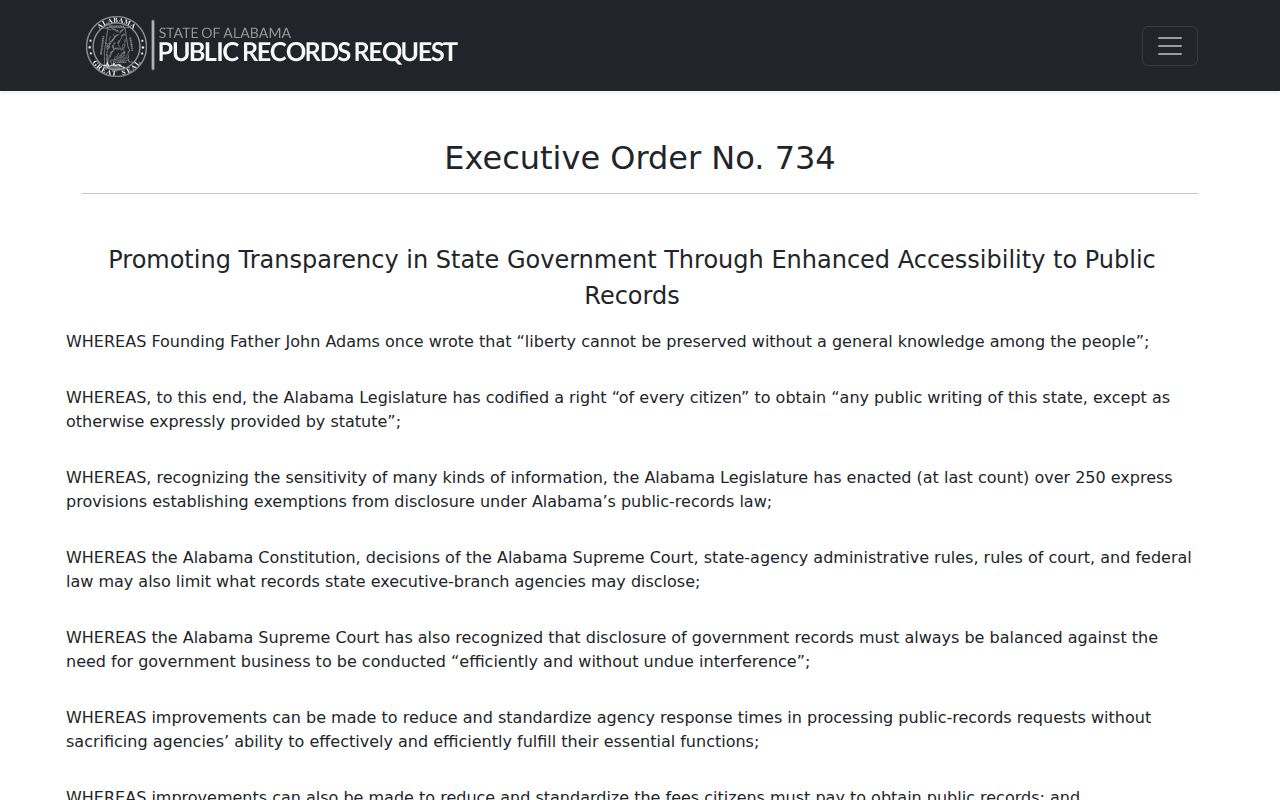
The captured portal shows the statewide request channel, which is separate from Hoover’s municipal form and county courthouse counters.
Alabama Records Are Not All Open
Alabama’s Open Records Law, Ala. Code §36-12-40, gives Alabama citizens a right to inspect and copy public writings unless another law closes them. Public does not always mean open. Adoption files, voter applications, personal tax records, library-use records, juvenile material, and sealed court records illustrate the limits. Requesters should identify a maintained record rather than demand research about a person.
The Alabama Department of Archives and History records FAQ draws that public-versus-open distinction.
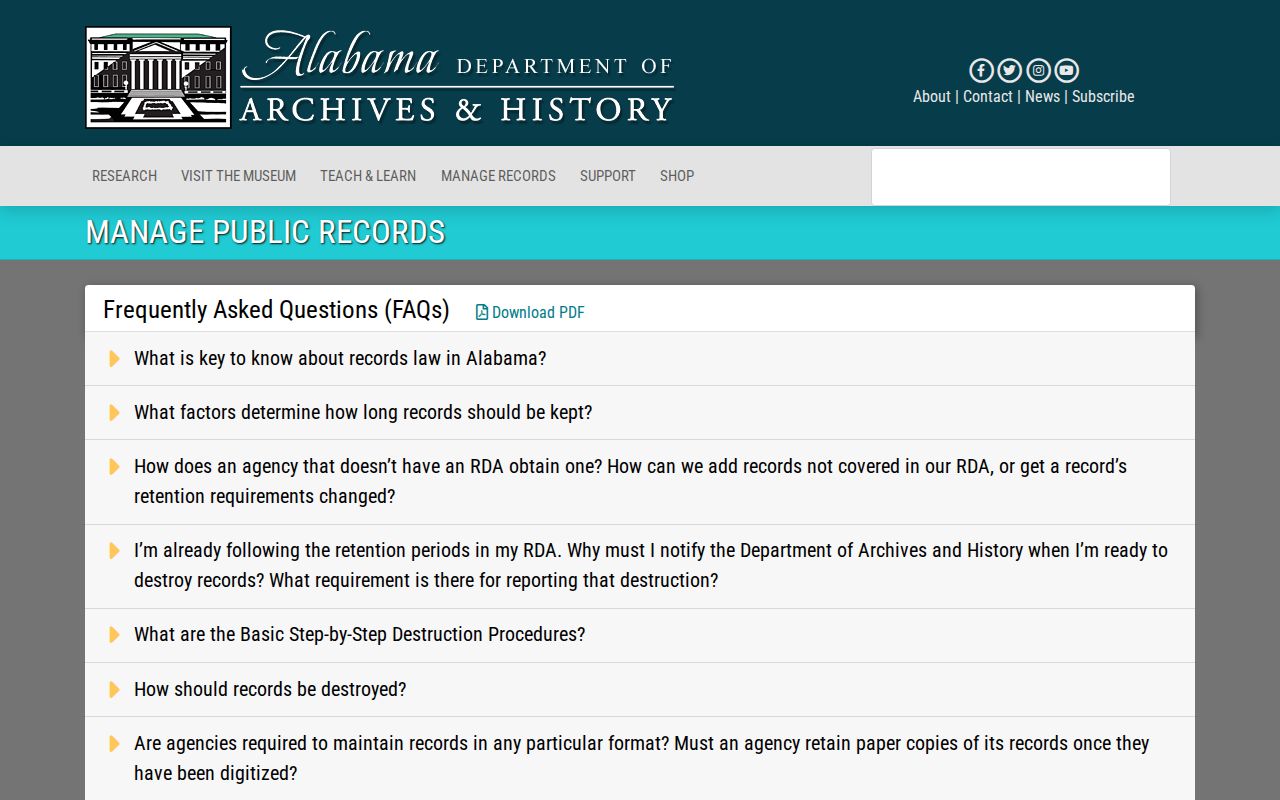
The archive guidance helps set expectations before a Hoover records request reaches a clerk, library, or courthouse.
Lawful use. Use Hoover records for legitimate personal research, genealogy, civic review, or fraud prevention, never to stalk, threaten, harass, or harm anyone.
Hoover Deed Records Index
The county line changes the deed-search experience. Shelby ROAM offers a deep public index with party, legal, document, book and page, instrument, and date searches. Results may include images and exports. Yet some older mortgage cancellations remain only in record-room books. The office advertises deeds from 1819 to the present, but that does not promise every image is online.
Jefferson LandmarkWeb offers Name, Document, Book/Page, Consideration, Record Date Range, Instrument Number, Legal, and Quick Search modes. Its landing page describes subscriber access to filings and select images. Exact start dates and current pricing are not published. When the site stops, the Birmingham or Bessemer Probate Recording counter is the official fallback. Lot, block, subdivision, and other legal-description terms often survive a name spelling or street-label change.
- Roll
- A list maintained for a set purpose, such as assessment or voter registration.
- Index
- A finding aid that points to a filed document; it is not always the full image.
- Parcel
- A mapped unit of land with its own county identifier.
- Criss-cross directory
- A directory arranged by street and house number rather than only by surname.
Official Hoover Resident Rolls
Commercial people-finder tools combine public filings, marketing files, and other datasets. They can lag behind a move, merge people who share a name, or repeat a stale address. Official sources are narrower but reveal their keeper, purpose, and correction channel. That makes them easier to test.
| Source type | Strength | Main limit |
|---|---|---|
| Assessor and GIS | Parcel and owner tied to a tax year | Ownership is not full household occupancy |
| Probate deed index | Filed party roles and legal description | Recording date may trail the real-world event |
| Voter confirmation | Official registration and polling details | Identity gate and protected addresses |
| Commercial compilation | Broad possible leads | Unknown refresh cycles and merged identities |
Correct a bad assessment with the assessor, a deed issue with Probate, voter data with the Board of Registrars, and a court error through the clerk or court process. A private compilation cannot amend the underlying record.
Hoover Business Lookup Clues
The Alabama Secretary of State business search can add a second identity point. Search modes include Entity Name, Entity Number, Officer or Agent or Incorporator, and Reservation or Registration ID. Results can show the entity’s type, status, formation details, addresses, and named roles. Some corporate records from 1949 through 2010 route to the state archives. A listed officer or agent has an affiliation with the entity, but that does not prove residence at its address.
The Alabama Business Entity Records search provides the official starting point.
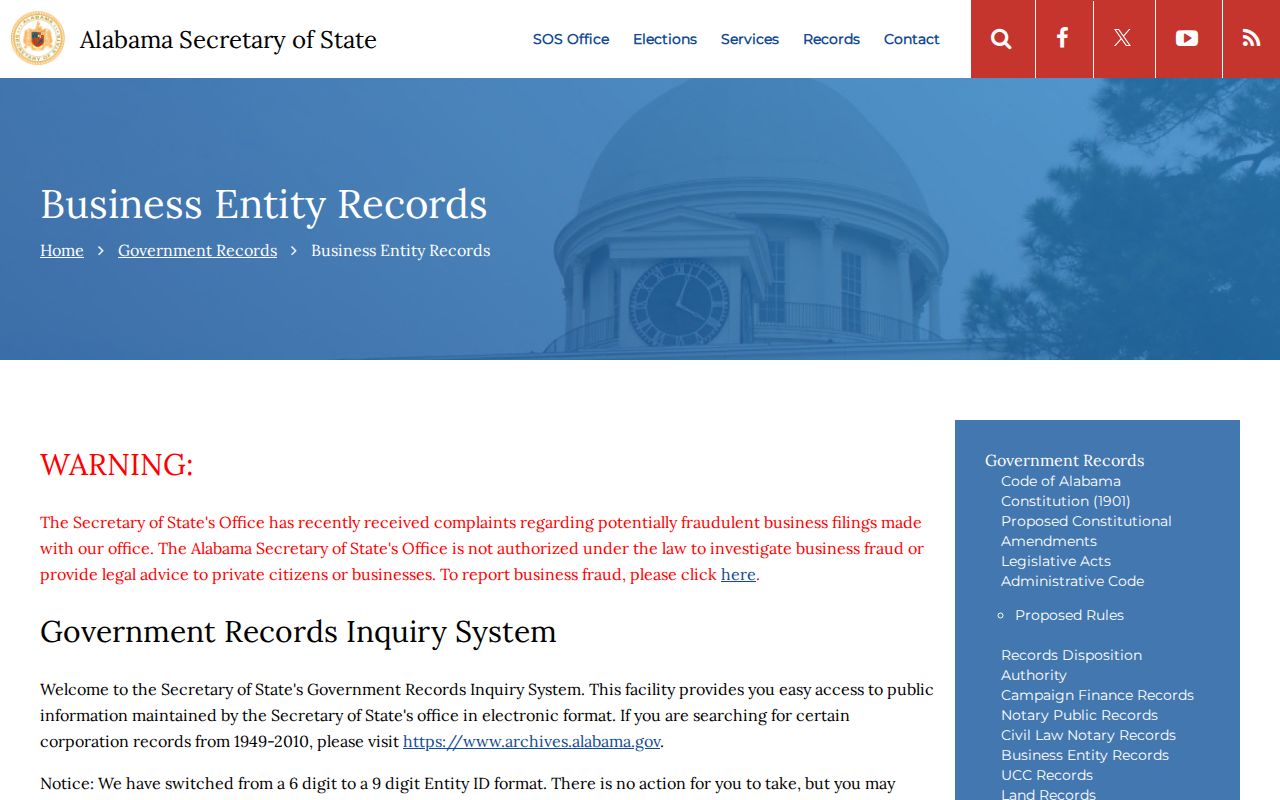
The captured search screen shows why an entity number or named role can distinguish two Hoover records that otherwise share a similar name.
Historical Hoover Directory Shelves
Historical Hoover directory work begins under Birmingham and suburban headings. Birmingham Public Library states that its directory run begins in 1883, with no volumes published in 1933, 1936, 1943, or 1945. The state archives lists separate suburban volumes beginning in 1965, selected later city volumes, Jefferson Metropolitan directories from the early 2000s, and Bessemer runs. Hoover’s incorporation in 1967 explains why older people may be indexed under Bluff Park, Rocky Ridge, Green Valley, Patton Chapel, Acton, or another community.
Hoover Historical Society serves as the official city archive by appointment. Its holdings include family genealogies, historical houses, clubs, schools, land development, interviews, and people files. The fullest shelf treatment and methods for reading an entry belong in the Hoover city directories collection. On the home page, the key point is simple: search the place name that existed in the target year, then compare the alphabetical and reverse sections.
Note: Telephone books name subscribers, while city directories may add occupation, spouse, employer, residence, and householder marks according to the volume key.
Hoover Directory Growth Labels
Hoover grew from 406 residents at incorporation to 92,606 in the 2020 census. It formed from distinct communities rather than one old downtown. Riverchase joined Hoover in 1980, and later growth extended toward Inverness and Greystone. That history leaves names spread across county files, postal labels, suburban directory titles, and local archive folders.
The practical result is not a missing record. It is often a missing historical label. A deed may stay in its county while a city boundary expands around the parcel. A directory may preserve the older community name. A mailing address may keep Birmingham, Pelham, Helena, or Vestavia Hills. Recording each label with its year creates a stronger resident trail than forcing every clue under the modern word “Hoover.”
Hoover Safety Record Checks
Official public-safety databases answer limited questions. The Alabama Department of Corrections search covers current state inmates and caps name results at 50; it is not a history of all arrests or past custody. Hoover jail information is available by telephone. County jail tools cover their own booking systems. The ALEA Community Information Center publishes several statutory search functions, but legal exclusions and identity checks still apply.
The ALEA Community Information Center is the official state search hub.
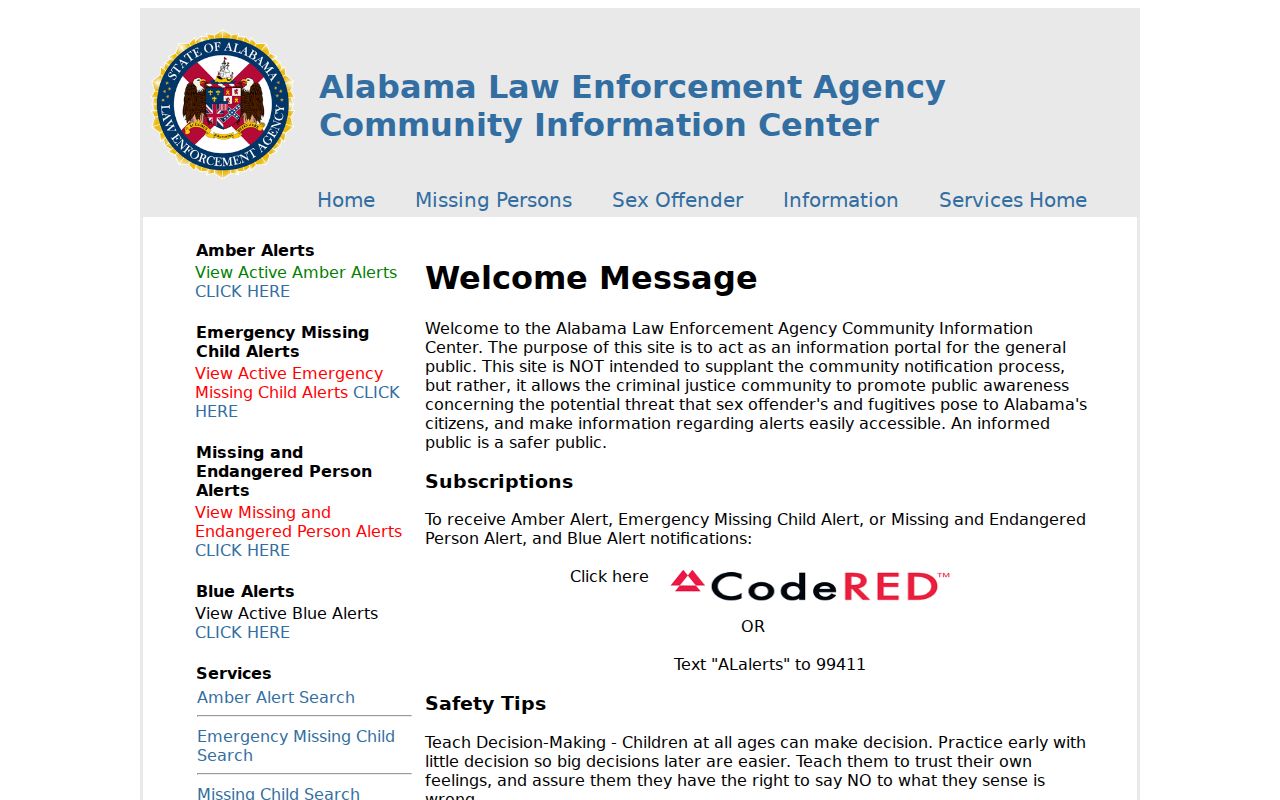
The image represents a specialized official lookup, not a general Hoover resident roll, and every result needs identity verification before it is associated with a person.
Public records can also test a demand for money. Jefferson County says its offices do not demand immediate gift-card, wire, telephone, or unverified-link payment and do not threaten arrest for unpaid taxes. Alabama’s official unclaimed-property claim route is free. Jefferson Landmark’s free name alert watches for new recorded documents after email confirmation, but it neither searches backward nor blocks a filing. Court or jury-duty demands should be checked through an independently sourced clerk number.