
Hoover Past Residents by Era
No single source spans every Hoover address and year. Start with the record closest to the target era, then use another kind of evidence to separate owner from occupant. The city incorporated in 1967, so earlier Hoover previous residents may be filed under Birmingham suburban headings or communities such as Bluff Park, Rocky Ridge, Green Valley, Patton Chapel, Acton, and Riverchase.
| Source | Local Years | Where Held | What It Can Show |
|---|---|---|---|
| Shelby deeds | 1819-present advertised | ROAM and Columbiana books | Legal ownership and recorded interests |
| Jefferson deeds | Web start not published | LandmarkWeb; Birmingham or Bessemer counter | Legal ownership and recorded interests |
| Birmingham directories | 1883-present with gaps | BPL Southern History | Name and address household clues |
| Suburban directories | Selected 1965-1994 | BPL and ADAH | Hoover-era suburban households |
| Jefferson Metropolitan | 2002, 2003, July 2004 | ADAH and BPL | Later address and name entries |
| Federal census | Public through 1950 | NARA and library databases | Household composition |
| Hoover permits | Coverage not published | City Clerk or Inspections request | Work, dates, applicant or contractor |
| Residence files | 1938-1975 selected | BPL Architecture & Design | Selected Jefferson-side structures |
A deed proves a recorded transaction, not residence. A directory entry is a dated clue, not a certified fact. Previous residents are strongest when an address, name, and time period agree across these different sources.
Start Hoover Address History
First establish whether the parcel lies in Jefferson or Shelby County. Search the assessor or GIS with the situs address, meaning the physical parcel location. Save the current owner, parcel ID, and exact legal description. The tax mailing address is only where notices go; it may belong to an entity or point elsewhere. A matching homestead indicator can support owner occupancy but cannot identify the rest of a household.
Next open the deed system for that county. Jefferson uses LandmarkWeb and a Birmingham or Bessemer record-room fallback. Shelby uses ROAM and the record room at 112 North Main Street in Columbiana. This two-county split is the key geographic fact behind Hoover previous-resident work.
Note: Search the property address first and keep the legal description, which remains useful when a postal label changes.
Trace Hoover Previous Owners
A chain of title is the sequence of recorded transfers for one parcel. It provides a skeleton for the past-resident search. Work backward from today’s owner and acquisition deed, keeping each instrument number, recording date, book and page, and legal description. Do not skip a link merely because the street address is absent from an old index.
- Confirm the present owner and legal description in the correct assessor or GIS.
- Find that owner as grantee, the buyer, in the county deed index and record the seller or grantor.
- Search the seller as a grantee to locate that person’s earlier purchase, using spelling variants and co-owner names.
- Repeat while matching the legal description. For entities, check predecessor names and related recorded references.
- Move to the appropriate record room when an online index or image stops. Ask for the deed book, direct and reverse index, or instrument image.
- Grantor and grantee
- The person or entity giving an interest and the one receiving it.
- Chain of title
- The linked sequence of recorded ownership transfers for the same land.
- Legal description
- The lot, block, subdivision, or survey text that identifies the parcel more reliably than an old street label.
The Jefferson LandmarkWeb screen shown here offers name, document, book and page, date, instrument, legal, and quick searches.
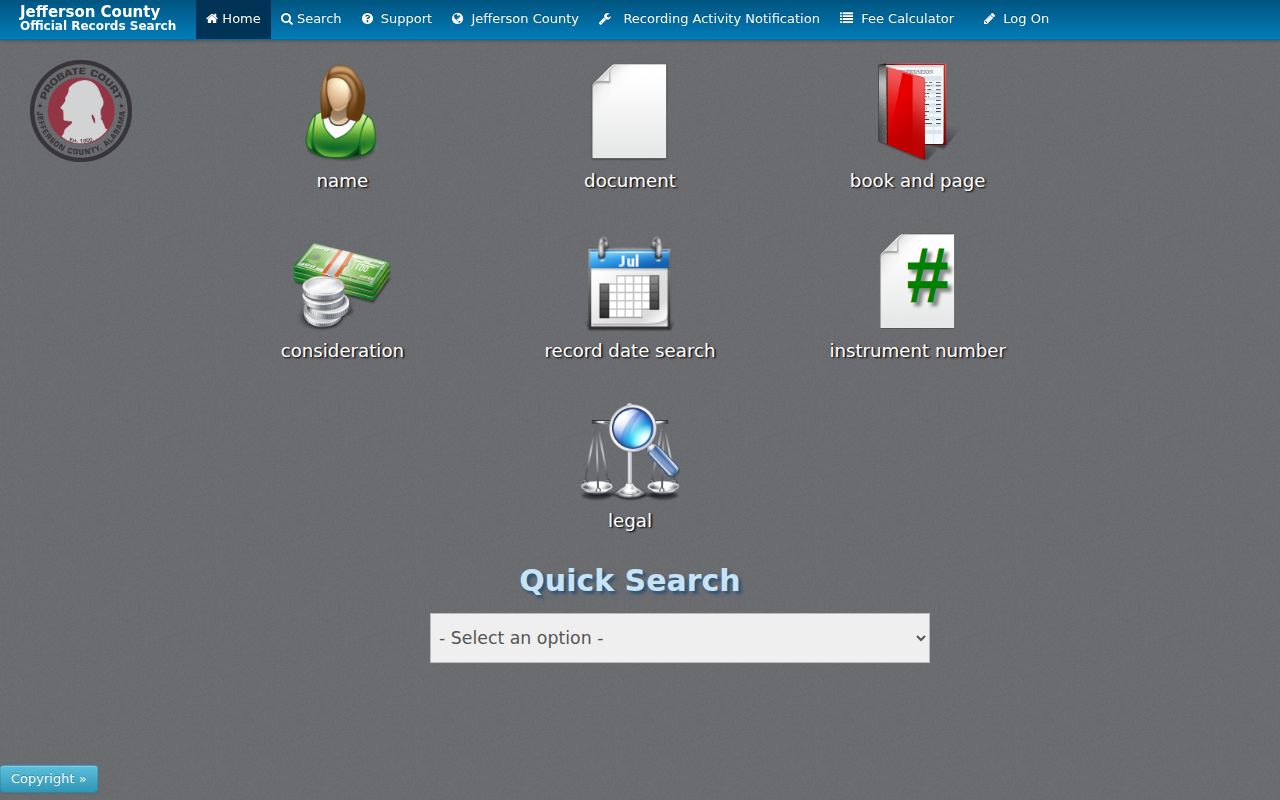
Its exact online start and current subscription cost were not published, so the county counter remains part of a complete Jefferson search.
Shelby Deeds Behind Hoover Homes
Shelby ROAM provides the deeper public web route, while the Shelby County Probate Court supplies the office fallback. ROAM searches instrument number, recording dates, company or surname, first name, document type, book and page, map references, lot, block, section, township, range, and legacy number. Name matching supports starts with, contains, exact, and phonetic choices. Results can switch among party, legal, and document views and export to Excel, PDF, or RTF.
The ROAM interface captured here is the online starting point for a Shelby-side chain.
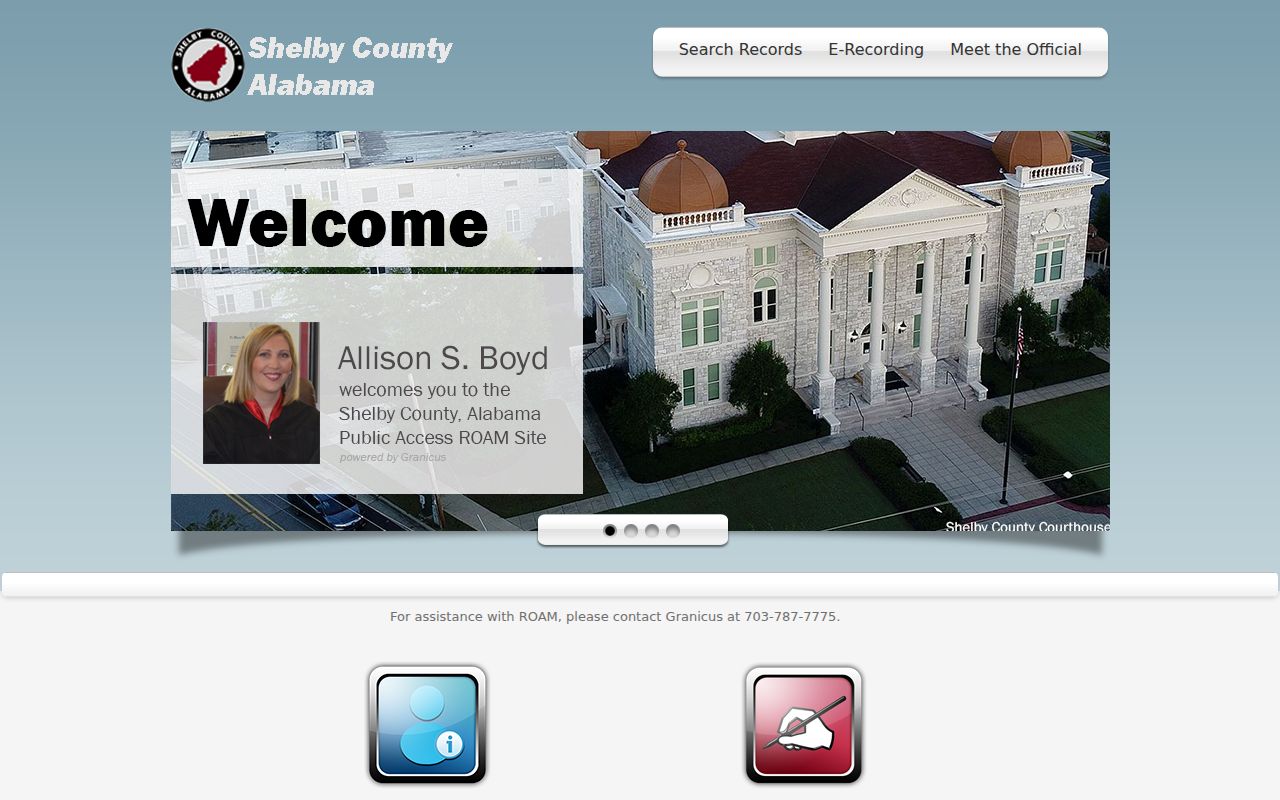
The image illustrates broad search access, but advertised deeds from 1819 to the present do not mean that every image is online.
Record-room tip. Some older Shelby mortgage cancellations remain only in books at Columbiana. Call Recording at 205-670-5220 before travel.
Read Hoover Deed Results
A Shelby result can reveal indexed name, party role, counterparty, instrument number, exact recording timestamp, document type, book and page, map book and page, first reference, and a legal description. It may also link an image and a briefcase function. Those fields let the prior-owner trail move one transfer at a time without treating every name on a document as an occupant.
The inspected ROAM result shown here demonstrates the indexed party and legal fields.
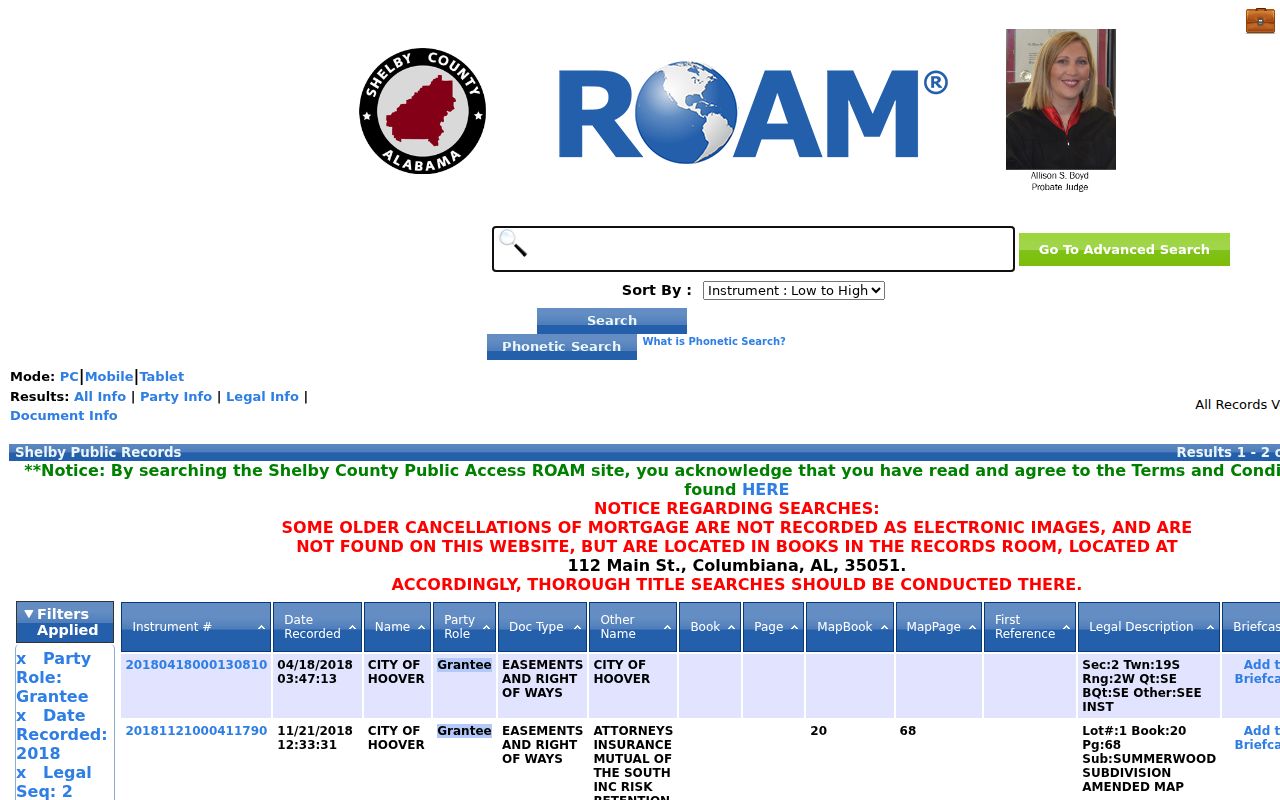
Use the party role and legal text together. A person may appear in a mortgage, release, or other filing without receiving ownership through a deed.
Hoover Past Household Clues
Ownership is only half the question. Birmingham Public Library’s directory run starts in 1883, with separate suburban volumes beginning in 1965. Selected suburban years continue through 1994, and Jefferson Metropolitan volumes survive for 2002 through July 2004. Search the alphabetical surname section and then the reverse street-number section. Check nearby years because canvass dates, moves, spelling drift, and telephone subscriber names can conflict.
A 1984 Polk example proves the risk. Its alphabetical listing placed Robt. W. Schaefer at 3317 Teakwood Road, while the reverse listing named Dale A. McGee and a telephone number at that address. Record both claims and seek another year or record. The Hoover city-directory collections provide the full year and repository detail.
One especially rare lead is the Hoover Civic Club’s 1965 telephone directory, reported to list family members with ages. Ask the Hoover Historical Society whether that item survives and what reproduction is allowed. It may offer a household snapshot just before incorporation.
Pair Hoover Directories and Census
Federal census schedules are public through 1950 under the 72-year rule. Pair a directory entry with the closest open census year, then compare names, ages, relationships, and address or enumeration geography. The 1960 census is not due for public release until 2032, so post-1950 Hoover household work must lean more heavily on directories, deeds, probate, obituaries, school or civic material, and permitted archives.
- Identify the historic community and county used for the target year.
- Search surname variants, initials, spouse, and employer in the alphabetical directory.
- Check the reverse street listing and adjacent directory years.
- Match the closest public census household, then test the same name against deed and probate evidence.
BPL keeps old and new street-name lists in both directions. Use them when a current number or road name produces no historical result. Hoover’s annexations and shifting postal names can change the heading even when the house stayed in place.
Maps for Hoover House History
No Hoover-titled Sanborn fire-insurance atlas was found. Hoover incorporated after the classic Sanborn period. Birmingham sheets are verified for 1885, 1888, 1891, and 1902, but their existence does not mean a present Hoover parcel appears on them. Test the historic location before relying on a sheet.
For older Jefferson-side homes, BPL Architecture & Design residence files from 1938 to 1975 may serve as a better substitute. Hoover Historical Society holds Abstracts, Historical Houses, Land Development, People, Churches, Cemeteries, and other local collections by appointment. The absence of a Sanborn sheet should route research to those repositories, not end it.
Note: Hoover Public Library does not publish an exact reverse-directory run, so use BPL and ADAH for documented years.
Close Hoover Resident Trails
Probate and obituaries can close a trail when an owner died or the deed chain shifts through an estate. County Probate Judicial divisions hold wills, administrations, and estate files according to jurisdiction. A land-record index is not a full estate docket. Ask for a case number, decedent, filing year, will, petition, heir notices, and final settlement. Adoption and protected judicial matters remain closed where the law requires.
Hoover Library provides Birmingham News microfilm for 1988 through 2008 and NewsBank full text from April 27, 1993 forward. Its scanner can send black-and-white PDF or JPG files to email or USB. Hoover Historical Society, the city’s historical cemetery resources, church collections, and searchable funeral-home obituaries add leads, though no comprehensive Hoover obituary index was verified.
The Jefferson recorded-document alert shown here is a free name-monitoring tool for new filings.
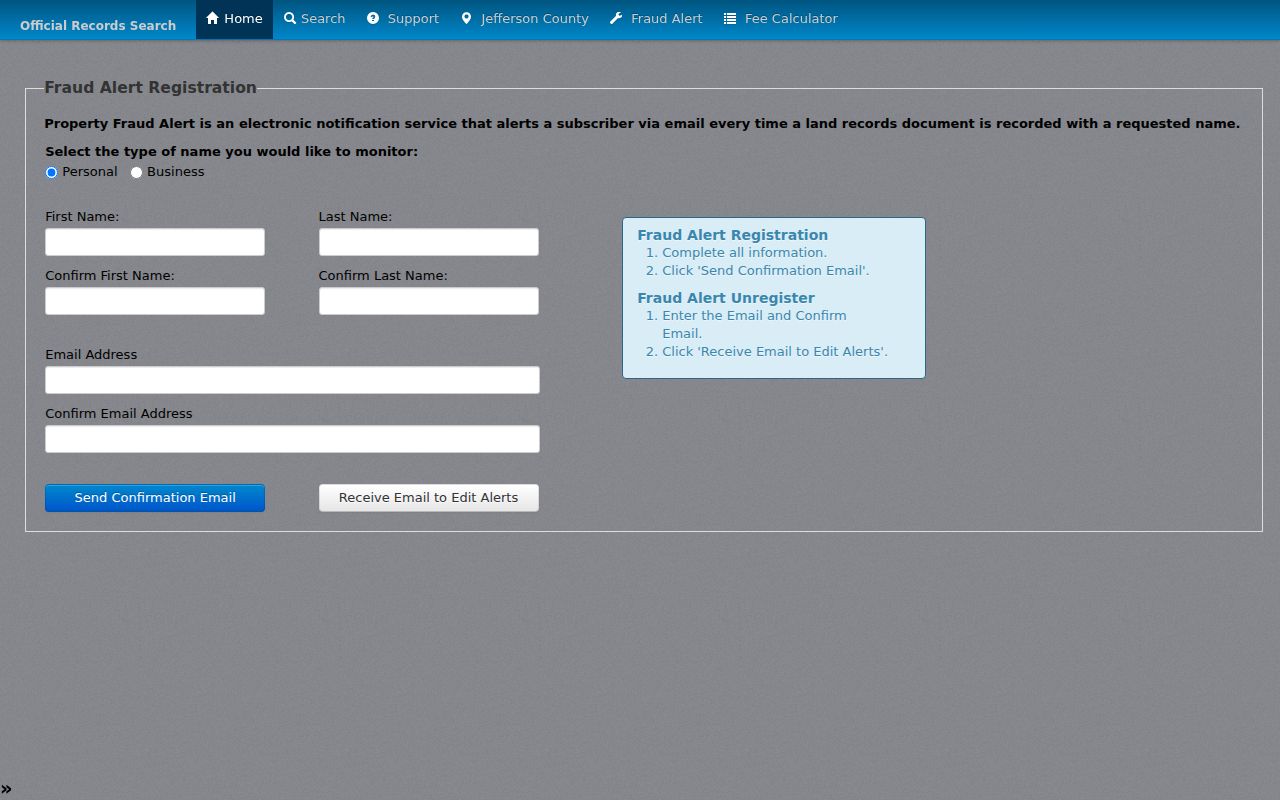
It does not search earlier Hoover previous residents, but it helps distinguish ongoing monitoring from the retrospective deed work described above.
Lawful Hoover Previous-Resident Research
Past-resident research is suited to house history, genealogy, heirs, and civic curiosity. Public availability does not authorize tracking or harassing a living person. Owners are not always occupants, and directory or telephone names may reflect a survey date rather than the date a volume reached the shelf. Date each claim and preserve the source.
Lawful use. Use Hoover previous-resident records for legitimate personal research. Alabama stalking and harassment laws still apply to public information.
When a portal fails, call the custodian with exact names, spelling variants, date range, parcel, legal description, book and page, or case number. Ask about counter, mail, email, copy, and certification options. An open-ended request that asks staff to reconstruct a whole family is not a substitute for the chain built from the records themselves. Previous residents should remain dated clues until the chain is independently confirmed.